
Practical checks for Israeli companies operating in the U.S. market and seeking to make a sound, coordinated, and well-documented decision
U.S. customs duty refunds have recently become a practical issue for companies operating in the U.S. market, importing products into the United States, or managing cross-border activity. For Israeli companies, the question is not only whether a cash refund may be available. In many cases, this is a broader issue that also concerns how import costs were treated within the group, how prices were updated, and the potential impact on reporting, pricing, and intercompany settlements.
In practice, even when the potential refund amount appears attractive, it should not be reviewed in isolation from the overall business structure. A company that operates in the United States through a subsidiary, distributor, commercial partner, or several group entities needs to understand not only whether a refund may be available, but also who actually bore the cost, how the cost was treated in real time, and whether receiving the refund creates additional implications that should be managed properly.
Why does it matter now?
In the U.S. market, more companies are already reviewing the possibility of substantial refunds. For Israeli companies, the amounts may sometimes be lower, but the level of complexity is not necessarily lower. The more the activity is carried out through several entities, and the stronger the link between U.S. imports and pricing, profitability, and reporting between Israel and the United States, the more a customs duty refund review shifts from an operational matter to a broader issue with business, accounting, and tax implications.
In this sense, the question is not only “can we get money back,” but “how can we do this properly without creating problems elsewhere.” In our professional experience, in cross-border cases the truly important questions often begin precisely after the refund opportunity has been identified.
Who actually bore the customs duty cost?
The first review should begin with identifying the importer of record, but it should not end there. In many cases, the party that paid the customs duty at the border is not necessarily the party that economically bore the cost. The U.S. company may have paid, but the cost may later have been passed on to customers, considered vis-a-vis a distributor, or included in settlements between related companies within the group.
This is a critical point. If the cost did not remain with the party that technically paid it, it is difficult to treat the refund as a free amount that remains entirely with that party. For an Israeli company operating in the United States through a group structure, it is important to understand where the cost actually came to rest, who took it into account, and whether business adjustments were already made based on that cost.
How did the company treat the customs duty cost in real time?
For many companies, import costs do not remain only as an expense line item. They affect sales prices, profitability levels, performance measurement of different group entities, and sometimes also transfer pricing between related companies. Therefore, before reviewing receipt of a refund, the company should look back and examine what was done in real time.
If product prices in the United States increased as a result of import costs, and if the profitability of the U.S. company was assessed based on the new costs, a refund received at a later stage may raise additional questions. Sometimes it will be necessary to check whether the refund changes the business picture that served as the basis for earlier decisions. Not every case will require an update, but it is important to make sure that the refund fits within the existing framework and does not create a contradiction between the accounting treatment, the pricing approach, and the way the activity was presented within the group.
Do the documents present one clear picture?
Many companies discover that the main challenge is not only the question of eligibility, but the ability to present a consistent factual picture. Customs documents are sometimes held by one person, accounting records by another, commercial agreements are stored separately, and documentation of intercompany settlements is not centralized in one file.
In that situation, even if there is a genuine basis for reviewing a refund, the process becomes more complex. It is therefore important to gather in advance an organized factual basis that includes import records, payment confirmations, accounting reports, commercial agreements, and documentation of settlements between related companies where relevant. The goal is not only to show that customs duty was paid, but to present one coherent factual story: who imported, who paid, who bore the cost, how it was recorded, and whether it was passed on.
What do the law and the authorities review in practice?
When reviewing the possibility of U.S. customs duty refunds, the focus is not limited to the mere existence of a payment. In practice, the review also covers the identity of the importer, the nature of the records, the timeframe for submitting the request, the completeness of the documentation, and the connection between the payment made and the relevant transactions. At the same time, from a business and tax perspective, it is important to examine who benefited from or was affected by the cost along the way, whether the cost was passed on through pricing, and whether intercompany adjustments were made based on that cost.
In other words, a customs duty refund may begin as a technical matter, but for companies with international activity it almost always requires a broader review. The more complex the group structure, and the more the cost has already been embedded in pricing or profitability, the more important it is to ensure alignment between the documents, the records, and the position the company seeks to present.
Key risks companies tend to miss
Commercial risk
If import costs were already taken into account in the prices set for customers in the United States, a later refund may raise questions about how those prices were calculated in the first place. Even if there is no automatic obligation to make a change, it is important to understand whether a gap has been created between the earlier business position and the situation after the refund is received.
Intercompany risk within the group
When several related entities are involved in the import, sale, and settlement process, a customs duty refund may bring internal disagreements to the surface. The question of who is entitled to benefit from the refund, or whether a prior settlement needs to be updated, is not always simple. Without organized documentation and a clear position, it is often difficult to align the companies.
Evidentiary risk
A company that seeks to move forward without gathering documents and a factual basis may discover that the main issue is not eligibility itself, but the ability to show one consistent picture. When there is no clear line connecting the import records, reports, agreements, and internal records, each stage of the process becomes more complex.
Cross-border reporting risk
In some cases, the way costs and refunds were treated may also affect the group’s broader reporting. When the activity spans Israel and the United States, it is important to ensure that the treatment of the refund does not create gaps between the countries or between the reporting parties.
Example for illustration purposes only
Assume that an Israeli company markets products in the United States through a U.S. subsidiary. During the year, the subsidiary imported goods in approximately 15 million $ and paid customs duties of approximately $900,000. Following the increase in import costs, the company updated prices for some of the products in the United States and, at the same time, reviewed the profitability of the local activity based on the new costs.
A possibility now arises to review a refund of approximately $600,000. At this stage, the company cannot be satisfied only with the question of whether it meets the technical conditions for receiving the amount. It must examine whether the customs duty cost that was already considered in pricing and profitability requires an additional review, and whether the refund should remain entirely with the U.S. company or also affect the settlements within the group. Without a clear answer, even an event that appears positive may become a matter that creates repeated work and internal disagreements.
Anonymous client story
In one case, an Israeli group operating in the United States through a subsidiary and a local distributor sought to review the possibility of customs duty refunds after a period in which import costs had increased significantly. At first, it seemed to be a relatively simple review: the U.S. company had paid the customs duties, so the assumption was that it would also be the sole beneficiary of any refund received.
However, when the picture was examined in depth, it became clear that part of the cost had already been considered in an intercompany settlement, while another part had in practice affected sales prices in the United States. In addition, the relevant documents were spread among several stakeholders and across two countries. Only after an organized mapping of the transactions, agreements, and records was it possible to develop a clearer picture and build a consistent process. The main conclusion was that the real question was not only whether eligibility existed, but how to manage the event properly within the overall structure.
In summary, U.S. customs duty refunds can create real value for Israeli companies operating in the U.S. market. However, the right decision should not be based only on the amount of the potential refund. It is important to understand who actually bore the cost, how the cost was treated along the way, whether the documents support a consistent picture, and whether there are implications for additional parties within or outside the group.
When the issue is reviewed in advance, in a coordinated and methodical manner, it is possible to reduce uncertainty and turn a complex issue into a well-managed business process. This is especially true when the activity is cross-border and requires coordination between Israel and the United States.
TaxLink – Our Story
TaxLink is an accounting firm with a team specializing in both U.S. tax and Israeli tax. Our practical experience with the Internal Revenue Service (IRS) and the Israel Tax Authority, together with a deep understanding of the interface between the two systems, enables us to build an end-to-end solution tailored to your case.
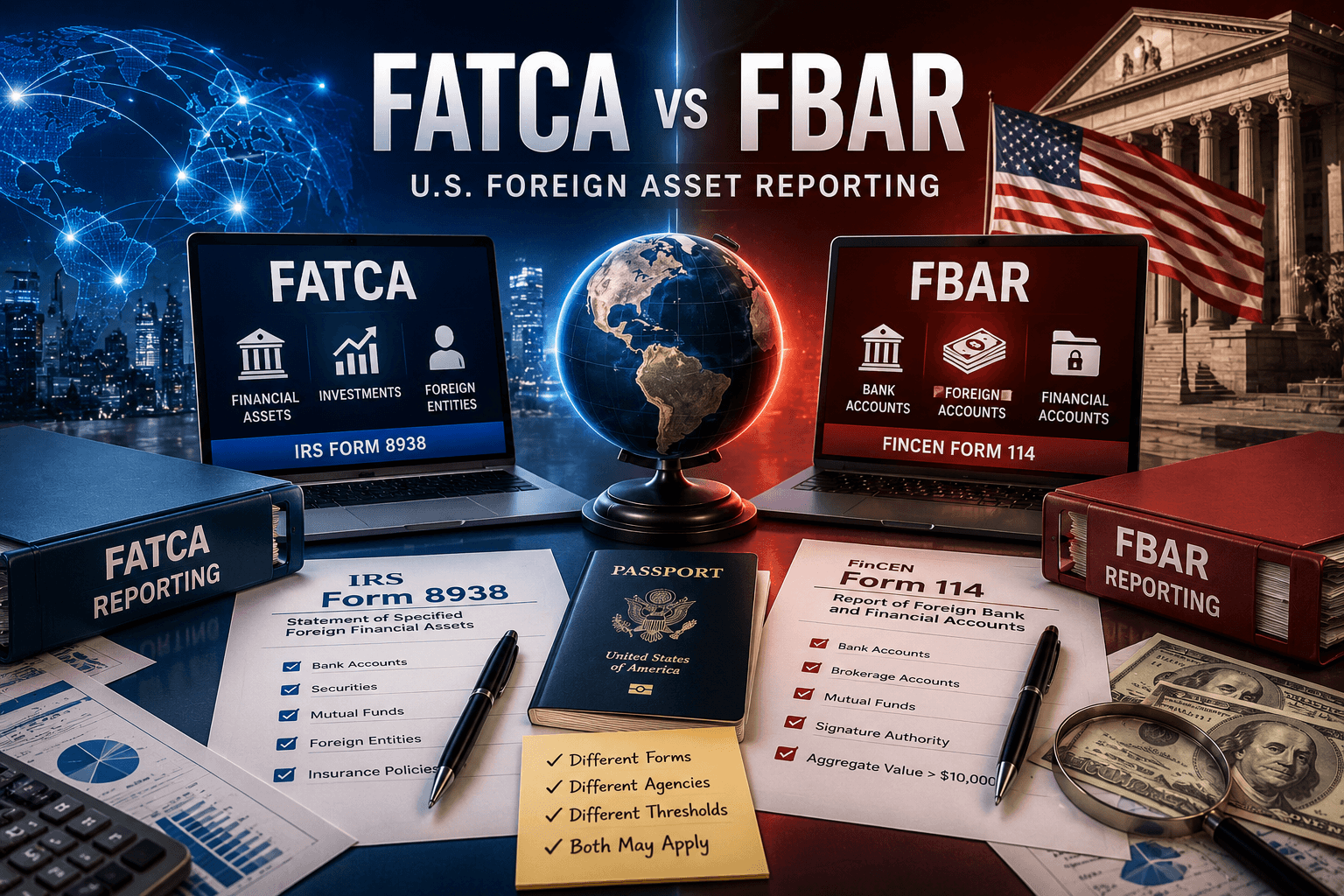
Most clients who contact us do so because they are required to file reports in the United States – whether Form 1040, Foreign Account Tax Compliance Act (FATCA) reporting, Foreign Bank Account Report (FBAR) filings, or reporting related to investments in U.S. real estate. We manage the process as one coordinated cross-border matter, with the aim of reducing errors, avoiding duplication, and assisting in reducing double taxation, all within the framework of U.S. law, Israeli law, and the income tax treaty between the United States and Israel.
If your company imports into the United States, operates through a U.S. company, or is considering pursuing customs duty refunds, this is the right time to pause and carry out an organized review. At TaxLink, we help map the full picture, gather the relevant documents, and examine the interface between the accounting, tax, and international aspects, in order to support more accurate decision-making throughout the process.

FAQ
Is every company that paid customs duties in the United States entitled to a refund?
No. Eligibility depends on the importer’s identity, the type of records, meeting deadlines, and the quality of supporting documentation.
Why is it not enough to check who paid the customs duty?
Because the party that paid at the border is not always the party that economically bore the cost within the transaction or group.
Which documents are important to gather at the beginning of the review?
Import records, payment confirmations, accounting reports, commercial agreements, and documentation of settlements between related companies.
Can a customs duty refund affect pricing and profitability?
Yes. If import costs were factored into prices or profitability, a later refund may justify an additional review.
What is the first step a company should take?
Map the imports, costs, involved parties, existing documents, and the impact on pricing, profitability, and group settlements.