
Many Israeli entrepreneurs, investors, and business owners incorporate companies in the United States for activities such as e-commerce, technology, consulting, and real estate investment. Although forming a company in states such as Delaware, Wyoming, or Florida is often a straightforward process, U.S. reporting requirements must be met even if your company has not yet generated any income.
Some mistakenly believe that a U.S. company with limited activity, no income, or no employees in the United States is subject to very few reporting requirements
In practice, even inactive companies, or companies with low levels of activity, may be required to maintain a Registered Agent, file annual reports with the state, pay state fees, keep proper books and records, and file federal tax returns or information returns with the Internal Revenue Service (IRS).
Failure to comply with these requirements may lead to late filing penalties, interest charges, loss of “good standing” status, and, in some cases, administrative dissolution of the company or revocation of its registration by the state. For Israeli individuals and businesses using a U.S. entity as part of a broader international structure, meeting annual compliance requirements is an integral part of proper business management and of reducing unnecessary risks and issues down the road.
What Is a Registered Agent?
Every U.S. corporation or limited liability company (LLC) is generally required to maintain a Registered Agent in the state in which it was formed. In addition, if the company is also registered in another state, it will usually be required to maintain a Registered Agent in that state as well.
A Registered Agent is an individual or legal entity authorized to receive official documents on behalf of the company, such as service of process or notices from the Secretary of State. In general, the Registered Agent must maintain a physical address in the relevant state and be available during standard business hours.
For Israeli-owned U.S. businesses, it is especially important to maintain a reliable Registered Agent. Since in many cases the owners are based in Israel and do not have a physical presence in the United States, the Registered Agent serves as the point of contact for receiving important official notices from state authorities. If a company does not maintain an active Registered Agent, state authorities may impose penalties, reject filings, or ultimately determine that the company is not in “good standing.” In exceptional cases, the authorities may order the company’s dissolution or, at the very least, revoke its ability to operate commercially in that state.
Annual Reports and Additional State-Level Obligations
In most U.S. states, companies are required to file an annual or periodic report in order to update the company’s details in the state records. This filing is separate from federal tax reporting and is usually handled with a state-level authority.
Israeli business owners should know that the obligation to file annual reports depends on the state of incorporation and, where relevant, on any additional states in which the company has registered. Filing deadlines and fees vary from state to state. For example, some states require annual filing, while others require filing once every two years.
Missing the deadline for filing an annual report may have practical and legal consequences. These may include late filing penalties, loss of good standing status, restrictions on obtaining state certificates, and, ultimately, in exceptional cases, dissolution of the company.
Franchise Tax and Additional State-Level Payments
In addition to filing annual reports, many U.S. states impose a tax known as “Franchise Tax,” or other annual taxes or fees, for the mere holding or operation of an entity in that state. It is important to understand that these payments do not necessarily depend on the company’s profitability. Therefore, a company may be liable for state-level payments even if it had no income at all during the year.
Franchise Tax is a payment imposed by certain U.S. states on businesses for the right to be incorporated as a company and to operate within their jurisdiction. This tax is separate from federal or state income taxes. In some cases, a company may be liable for Franchise Tax even if it was incorporated in another state but operates in that state.
For example, Delaware imposes an annual Franchise Tax on corporations, and California often imposes a minimum annual charge. Other states may collect renewal fees, reporting fees, or similar annual payments.
Therefore, even a company that has not yet begun ongoing activity, or that has not generated income, may still be required to file state reports or pay minimum annual charges. Failure to comply with these requirements may lead to penalties and interest charges, even when the company itself is not conducting active commercial operations
Federal Tax Filings and Information Returns
Federal reporting obligations depend on the company’s legal and tax classification. A U.S. corporation generally files Form 1120. A partnership generally files Form 1065. An LLC may be treated for tax purposes as a corporation, a partnership, or a disregarded entity, depending on the election made and the number of owners.
It is important to emphasize that reporting obligations does not always depend on whether the company has taxable income. Certain entities may be required to file returns even if they had no income or net profit. In addition, certain foreign-owned U.S. entities may be required to file Form 5472 together with a pro forma Form 1120, in order to report reportable transactions with foreign owners or related parties. This issue is particularly relevant to foreign-owned single-member LLCs and to other foreign-owned structures.
Federal filing deadlines vary according to the type of entity and the tax year. An extension may sometimes be obtained, but an extension to file does not necessarily extend the deadline for paying tax, if any tax is due. Late filing or late payment may result in penalties and interest. Where required information returns are not filed properly, the penalties may be significant.
Why Is Ongoing Compliance Important?
Annual compliance is not merely an administrative burden. It is essential for keeping a U.S. company active and in good standing. A company that loses its good standing status may face difficulties with bank accounts, contracts, status certificates, investments, or transactions.
For Israeli entrepreneurs operating in the U.S. market, such issues may arise unexpectedly if annual requirements are missed. In many cases, restoring the company to good standing is more expensive than complying with all obligations in the first place.
Therefore, Israeli owners of U.S. companies should operate in an organized manner, including with respect to reporting and tax payment deadlines, renewal of the Registered Agent, and any unique reporting obligation applicable to the entity. Ongoing review of these requirements can reduce risks, prevent penalties, and support long-term business stability.
TaxLink – Our Story
TaxLink is a certified public accounting firm specializing in U.S. and Israeli taxation. Our practical experience with the IRS and with the Israel Tax Authority, together with a deep understanding of the interaction between the two systems, enables us to build a tailored end-to-end solution for your case.
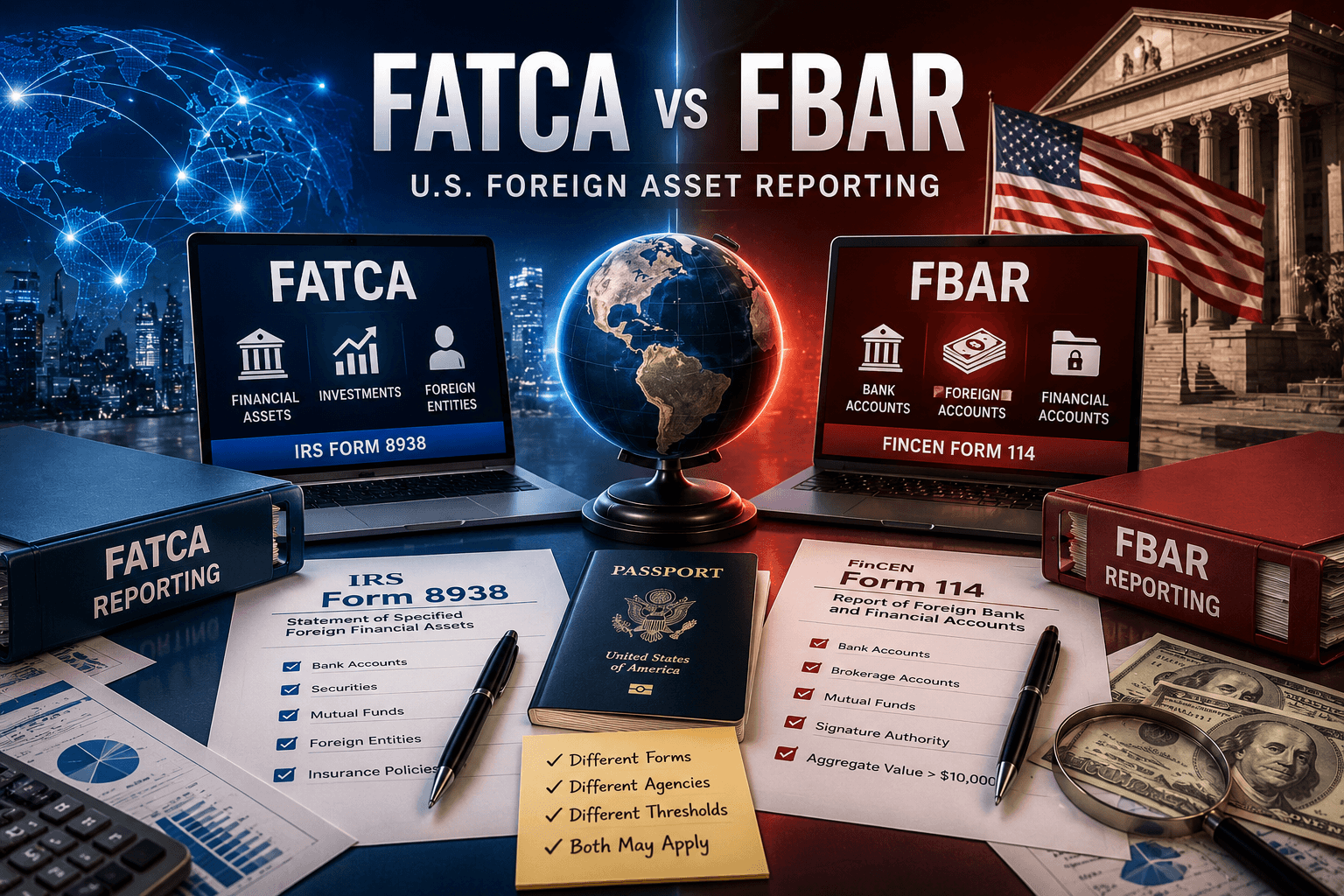
Most clients who contact us do so because they are required to file reports in the United States – whether it involves Form 1040, Foreign Account Tax Compliance Act (FATCA) reporting, Foreign Bank Account Report (FBAR) reporting, or investments in U.S. real estate. We manage the process as one coordinated cross-border matter, with the aim of reducing errors, avoiding duplication, and assisting in the prevention of double taxation, all within the framework of U.S. law, Israeli law, and the tax treaty between the United States and Israel.

FAQ
Which annual filings should Israeli-owned U.S. companies generally monitor?
Most Israeli-owned U.S. companies should monitor renewal of the Registered Agent, annual or periodic state reports, possible Franchise Taxes or annual state-level fees, and federal tax returns or information returns, according to the company’s classification and ownership structure.
Is a U.S. company required to pay state Franchise Tax even if it has no income?
Sometimes, yes. Many states impose annual minimum taxes, Franchise Taxes, or renewal fees even if the company had no income or did not actually conduct activity during the year.
What records should an Israeli-owned U.S. company keep during the year?
The company should keep bank statements, invoices, receipts for expenses, contracts, payroll records where relevant, ownership and capital contribution records, and documentation of transactions with shareholders or related parties.
How can a company check its annual report and Franchise Tax obligations at the state level?
The company should check the website of the Secretary of State or the equivalent authority in each relevant state, and also verify whether the state tax authority imposes Franchise Taxes, annual minimum taxes, or separate business reporting obligations.